

Your Guide to Fixed Dental Bridges
Fixed dental bridges are a common restorative option for patients with missing teeth. They restore oral function and improve smile aesthetics. This guide outlines the main types of fixed bridges, their clinical benefits, the placement process, typical costs, and common insurance considerations, helping patients plan treatment and finances.
What Are Fixed Dental Bridges and How Do They Restore Missing Teeth?
Fixed dental bridges replace one or more missing teeth by anchoring to adjacent natural teeth or dental implants. Typical bridges use crowns on the abutment teeth with one or more pontics in the gap to restore occlusion, support facial contours, and prevent neighbouring teeth from shifting.
Definition and Types of Fixed Dental Bridges
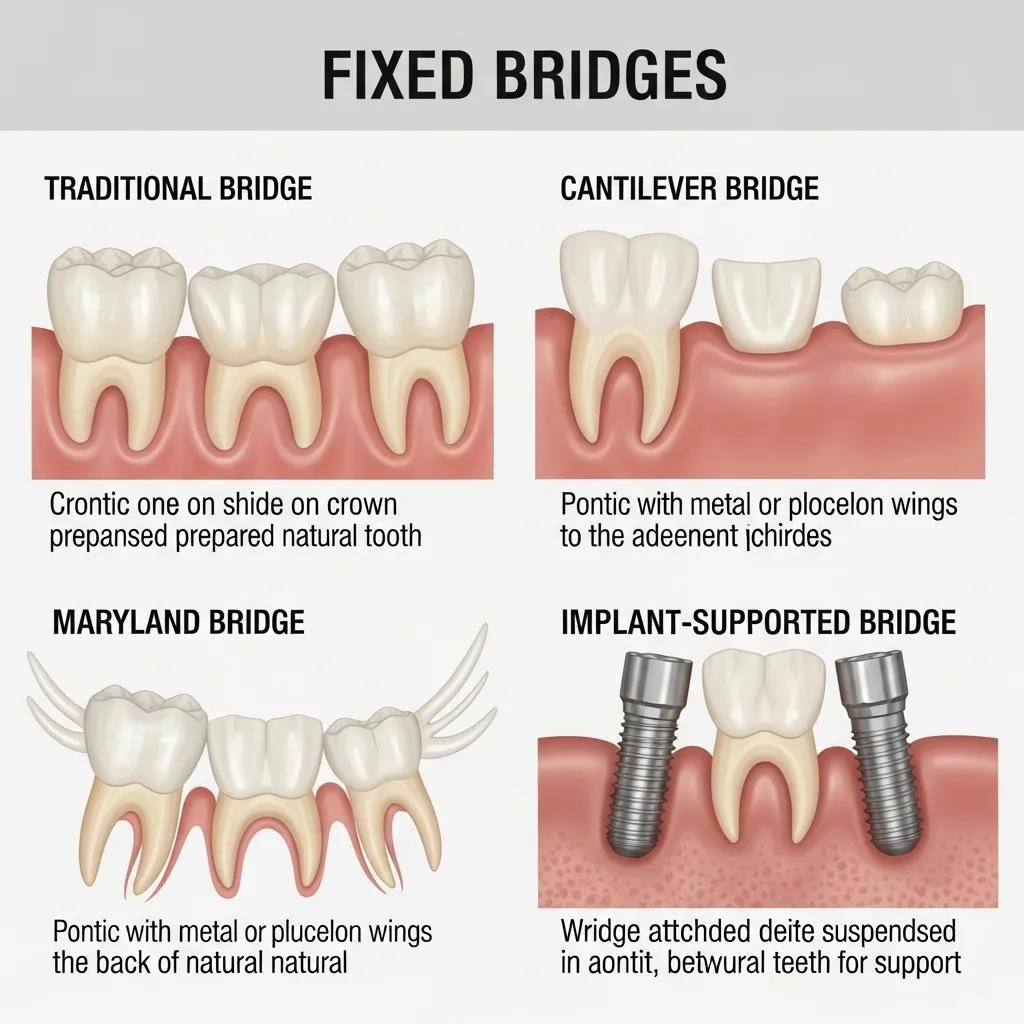
Several types of fixed bridges address different clinical needs:
Traditional Bridge: A pontic supported by crowns on adjacent teeth.
Cantilever Bridge: Anchored to a single abutment when only one neighbouring tooth is available.
Maryland Bridge: Uses a metal or porcelain framework bonded to the back of adjacent teeth, requiring less tooth preparation.
Implant-Supported Bridge: Anchored to dental implants, offering stable support for multiple missing teeth.
Maryland bridges require minimal tooth preparation and specific clinical assessment before selection.
Maryland Bridges: Minimal Prep, Benefits, and Common Issues
Resin bonded bridges are fixed prostheses that require little to no surgery and are held in place by composite resin cements. The “Maryland” bridge, which was made possible by the invention of the electrolytical etching method for nickel-chrome alloys, enabled the resin cement to undergo micromechanical adhesion to the metal surface. Their major advantage is that they require minimal, or at best, no tooth preparation. The preparation is usually kept within enamel which eliminates the need for local anesthesia during tooth preparation. When care is taken to maintain the margins of the Maryland bridges supragingivally, periodontal health is preserved. An additional advantage of the Maryland bridges is that in the event that a wing debonds, it is possible to rebond it after merely cleansing the wing and tooth. The most frequent issues with resin-bonded prostheses including debonding are cavities and three-tooth discoloration.
An Overview of Maryland Bridges and their Clinical Applications, M Ibrahim, 2022
How Fixed Dental Bridges Improve Oral Function and Aesthetics
Fixed bridges restore chewing function and support clearer speech, while closing gaps to improve smile appearance and patient confidence. The stability they provide allows patients to eat a broader diet after an adjustment period and usually improves social comfort.
What Are the Typical Costs and Insurance Coverage Options for Dental Bridges Near Me?
Bridge costs vary by type, materials, and procedure complexity. Understanding these factors helps patients budget and compare options.
Understanding Dental Bridge Cost Factors in Rialto and Inland Empire
Key cost drivers include:
Type of Bridge: Traditional bridges are generally less expensive than implant-supported options.
Complexity of Procedure: Additional treatments (extractions, bone grafting) raise costs.
Materials Used: Porcelain and zirconia provide superior aesthetics and durability but at higher cost.
How Does Dental Insurance Cover Fixed Dental Bridges?
Coverage varies by plan. Many insurers pay a portion of the cost after deductibles; patients should confirm specifics with their carrier. Practices may offer in-house financing to help manage out-of-pocket expenses.
Percentage of Cost: Plans often cover a percentage of the allowed amount after deductibles.
In-House Payment Plans: Some practices, such as New Sham Dental, provide financing options to spread payments.
What Are the Step-by-Step Procedures for Getting a Fixed Dental Bridge?
Treatment usually follows several stages to ensure a functional, well-fitting restoration.
Detailed Dental Bridge Procedure Steps at the Office of Dr. Newsham
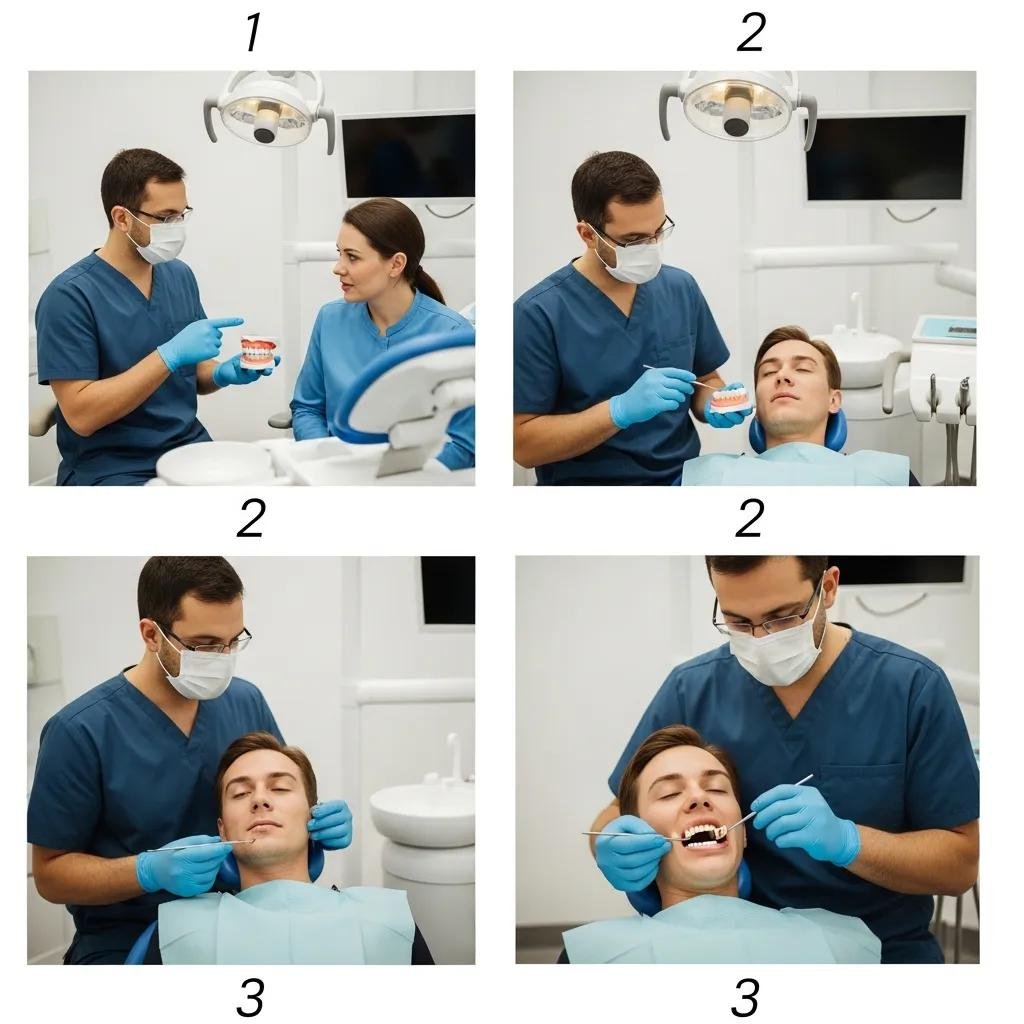
Initial Consultation: Evaluation of oral health and discussion of suitable bridge options.
Preparation of Adjacent Teeth: Minor enamel removal on abutments to fit crowns.
Impressions: Precise impressions are taken to fabricate a custom bridge.
Temporary Bridge: A provisional restoration may be placed while the final bridge is made.
Placement of the Bridge: The permanent bridge is fitted, adjusted, and cemented for comfort and function.
How Is Dental Anxiety Managed During the Bridge Procedure?
Managing anxiety improves the treatment experience. New Sham Dental offers measures to keep patients comfortable and relaxed:
Sedation Options: Several sedation methods are available for anxious patients.
Gentle Techniques: Clinicians use techniques to minimise discomfort.
Calming Environment: A welcoming setting helps reduce patient nerves.
How Do Fixed Dental Bridges Compare to Dental Implants in Cost and Benefits?
Patients often weigh bridges against implants when choosing a tooth-replacement option.
Dental Bridge vs. Implant: Cost Comparison and Patient Considerations
Fixed bridges usually have a lower upfront cost and are faster to complete. Implants often offer greater long-term stability and may last longer with proper care. Consider initial expense, expected longevity, and clinical suitability when choosing.
Benefits and Risks of Fixed Dental Bridges Compared to Implants
Fixed bridges are cost-effective and avoid surgery, but they can affect adjacent teeth and do not prevent jawbone loss as implants do. Understanding these trade-offs helps inform treatment decisions.
Benefits: Lower initial cost; quicker treatment; no implant surgery required.
Risks: Potential damage to adjacent teeth; may require replacement sooner than implants; does not stop bone loss.
These considerations support informed choices about dental rehabilitation.
Frequently Asked Questions
1. How long do fixed dental bridges typically last?
Bridges commonly last 5–15 years. Longevity depends on oral hygiene, material choice, and dental health. Regular exams and good home care—brushing and interdental cleaning—can extend service life. Have your dentist evaluate any signs of wear or damage.
2. What are the potential complications associated with fixed dental bridges?
Possible issues include sensitivity of abutment teeth, decay beneath crowns, and prosthesis loosening. Poor fit can cause occlusal problems or gum irritation. Regular check-ups allow early detection and management.
3. Can I eat normally with a fixed dental bridge?
Most patients resume a normal diet after adjustment. Avoid very hard or sticky foods initially to protect the prosthesis. Over time, most can eat preferred foods without discomfort.
4. Are there any special care instructions for fixed dental bridges?
Maintain diligent oral hygiene: brush twice daily and clean under and around the bridge with floss threaders or interdental brushes. Regular dental visits help monitor the restoration and surrounding tissues.
5. How do I know if I am a good candidate for a fixed dental bridge?
Good candidates have healthy adjacent teeth capable of supporting the bridge. A complete assessment will check gum health, neighboring teeth, bone support, and overall health. Consult your dentist for personalised advice.
6. What is the difference between a fixed dental bridge and a removable partial denture?
A fixed bridge is cemented and not removable by the patient; a removable partial denture can be taken out for cleaning and overnight. Fixed bridges generally feel more stable and natural, while removable options may need periodic adjustments.
7. Can fixed dental bridges be replaced if they fail?
Yes. If a bridge is loose, fractured, or compromised by decay, see your dentist promptly. Replacement may require treating abutment teeth before a new prosthesis is fabricated. Ongoing dental care helps prolong bridge life.
Conclusion
Fixed dental bridges provide a reliable way to restore function and aesthetics for patients with missing teeth. They support oral health and can improve quality of life. Consult a dental professional to review your options and determine the most appropriate restoration to achieve a natural-looking, functional smile.