
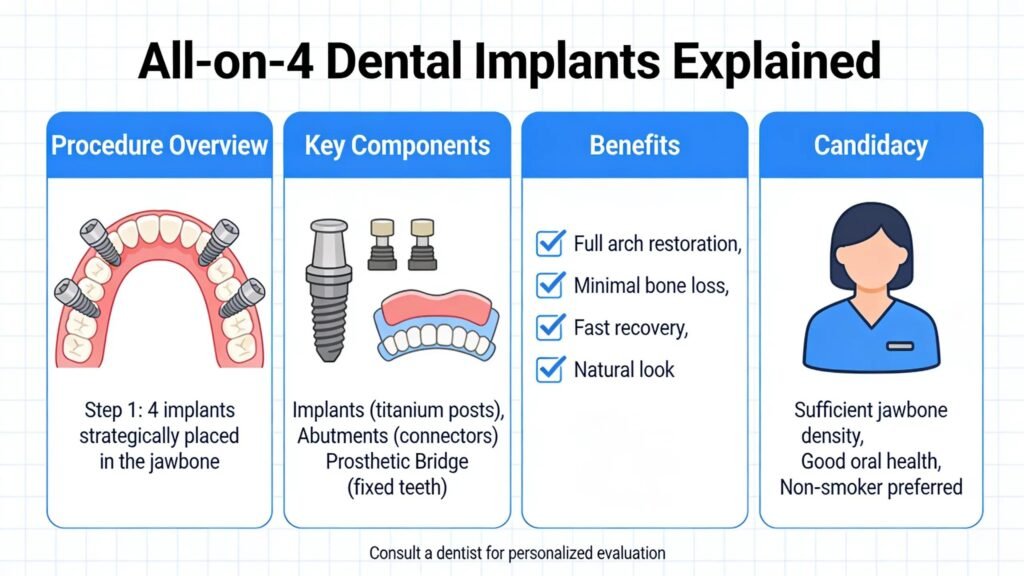
All-on-4 Dental Implants Explained
Full-arch restoration with All-on-4 dental implants provides an effective option for patients seeking to restore their smile and improve quality of life. It replaces a full set of prosthetic teeth using four strategically positioned implants and is less invasive than many traditional approaches. This guide reviews the benefits, the step-by-step procedure, cost and financing considerations, and the expected recovery so patients can make informed decisions about their dental care.
What Are the Key Benefits of All-on-4 Dental Implants?
All-on-4 implants offer several advantages for patients who require comprehensive tooth replacement.
Full Arch Restoration with Fewer Implants: The All-on-4 technique allows an entire dental arch to be restored with only four implants, reducing surgical complexity and recovery time.
Reduced Treatment Time: Patients can frequently receive provisional prosthetic teeth on the same day as implant placement, shortening the overall treatment timeline compared with traditional implant protocols.
Immediate Results: The All-on-4 approach enables patients to obtain a complete smile promptly, which can improve function and confidence.
Full Arch Restoration with Fewer Implants: The All-on-4 technique allows an entire dental arch to be restored with only four implants, reducing surgical complexity and recovery time.
Reduced Treatment Time: Patients can frequently receive provisional prosthetic teeth on the same day as implant placement, shortening the overall treatment timeline compared with traditional implant protocols.
Immediate Results: The All-on-4 approach enables patients to obtain a complete smile promptly, which can improve function and confidence.
Dr. Newsham provides compassionate care for anxious patients and children, ensuring each person feels comfortable throughout treatment.
What Are the Step-by-Step Procedures for All-on-4 Implant Placement?
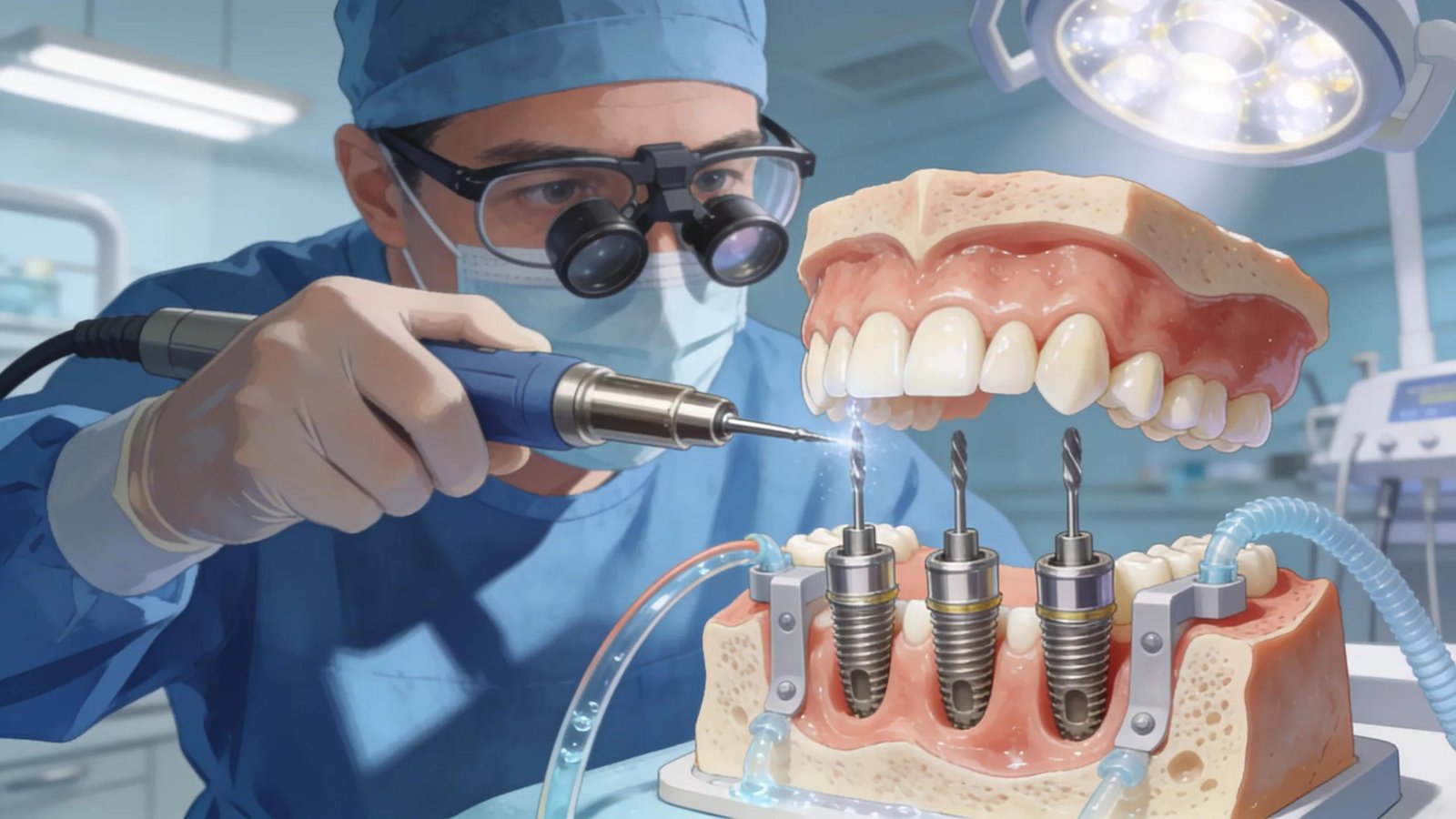
The All-on-4 placement follows a sequence of clinical steps designed to achieve predictable, stable results.
Initial Consultation and Assessment: The process begins with a comprehensive examination and imaging to assess bone quantity and plan optimal implant positions.
Surgical Placement of Implants: Four titanium implants are placed in the jawbone in positions that maximize available bone and often reduce the need for grafting.
Healing and Osseointegration: A healing period allows osseointegration, during which the implants integrate with the bone to form a stable foundation for the prosthesis.
Initial Consultation and Assessment: The process begins with a comprehensive examination and imaging to assess bone quantity and plan optimal implant positions.
Surgical Placement of Implants: Four titanium implants are placed in the jawbone in positions that maximize available bone and often reduce the need for grafting.
Healing and Osseointegration: A healing period allows osseointegration, during which the implants integrate with the bone to form a stable foundation for the prosthesis.
Knowing these stages helps patients prepare for the clinical and practical aspects of treatment.
Further research examines the indications, detailed surgical and prosthetic protocols, and clinical considerations of the All-on-4 treatment concept.
All-on-4 Treatment: Indications, Procedures & Complications
ABSTRACT: AbstractObjectivesTo systematically review the literature on the “all-on-four” treatment concept regarding its indications, surgical procedures, prosthetic protocols and technical and biological complications after at least three years in function.
The all-on-four treatment concept: Systematic review, D Soto-Peñaloza, 2017
All-on-4 Treatment: Indications, Procedures & Complications
ABSTRACT: AbstractObjectivesTo systematically review the literature on the “all-on-four” treatment concept regarding its indications, surgical procedures, prosthetic protocols and technical and biological complications after at least three years in function.
The all-on-four treatment concept: Systematic review, D Soto-Peñaloza, 2017
Understanding All-on-4 Costs and Financing Options
The cost of a full-arch All-on-4 restoration varies according to case complexity, the need for adjunctive procedures, and the materials selected for the prosthesis.
Factors Influencing Cost: Total cost is affected by additional procedures such as extractions or bone grafting, plus the choice of prosthetic materials.
Available Financing Plans: Many dental practices, including New Sham Dental, offer financing plans to help patients spread payment and make treatment more attainable.
Insurance Coverage Options: Some insurance policies may contribute toward portions of the treatment; patients should verify coverage details with their provider.
Factors Influencing Cost: Total cost is affected by additional procedures such as extractions or bone grafting, plus the choice of prosthetic materials.
Available Financing Plans: Many dental practices, including New Sham Dental, offer financing plans to help patients spread payment and make treatment more attainable.
Insurance Coverage Options: Some insurance policies may contribute toward portions of the treatment; patients should verify coverage details with their provider.
Financing Option
Description
Benefits
In-House Financing
Flexible payment plans offered by the dental practice
Affordable monthly payments
Third-Party Financing
External financing companies that specialize in dental procedures
Quick approval and various payment terms
Insurance Coverage
Potential coverage for dental implants
Reduces out-of-pocket expenses
The table summarizes financing options to assist patients in planning the financial aspects of treatment.
Understanding patient awareness, attitudes, and cost perceptions is important for effective education and for tailoring the treatment plan to individual needs.
Patient Awareness, Costs & Benefits of Dental Implants
Dental implants are increasingly viewed as a preferred treatment option for tooth replacement, yet gaps remain in patient knowledge,
attitudes, and cost perceptions. This cross-sectional,in vitrostudy surveyed 150 adults aged 20-60 to assess their
awareness, attitudes, and perceived costs of dental implants. Results show that while 70% of patients are aware of implants, only 30%
understand the procedure. Though 60% expressed interest in implants, 45% perceived them as too expensive. Positive attitudes correlated
with greater awareness, highlighting the need for enhanced education on the benefits and financial options associated with implants.Awareness, attitudes and cost among patients for dental implants in teeth replacement, 2024
Patient Awareness, Costs & Benefits of Dental Implants
Dental implants are increasingly viewed as a preferred treatment option for tooth replacement, yet gaps remain in patient knowledge,
attitudes, and cost perceptions. This cross-sectional,in vitrostudy surveyed 150 adults aged 20-60 to assess their
awareness, attitudes, and perceived costs of dental implants. Results show that while 70% of patients are aware of implants, only 30%
understand the procedure. Though 60% expressed interest in implants, 45% perceived them as too expensive. Positive attitudes correlated
with greater awareness, highlighting the need for enhanced education on the benefits and financial options associated with implants.
Awareness, attitudes and cost among patients for dental implants in teeth replacement, 2024
What Is the Expected Recovery Time and Aftercare Following All-on-4 Implant Surgery?

Recovery after All-on-4 surgery is typically rapid; many patients resume normal activities within a short time.
Initial Recovery Period: Patients should expect some swelling and discomfort for several days after surgery; symptoms are usually managed with prescribed medications.
Osseointegration Timeline: Complete osseointegration generally occurs within three to six months; patients should follow their dentist’s guidance throughout this period.
Aftercare Instructions: Meticulous oral hygiene and scheduled follow-up visits are essential to preserve implant integrity and surrounding tissue health.
Initial Recovery Period: Patients should expect some swelling and discomfort for several days after surgery; symptoms are usually managed with prescribed medications.
Osseointegration Timeline: Complete osseointegration generally occurs within three to six months; patients should follow their dentist’s guidance throughout this period.
Aftercare Instructions: Meticulous oral hygiene and scheduled follow-up visits are essential to preserve implant integrity and surrounding tissue health.
Adherence to aftercare instructions and routine monitoring supports successful healing and helps ensure the long-term function of the restoration.
Frequently Asked Questions
What are the potential risks and complications associated with All-on-4 implants?
Although All-on-4 implants are generally safe, possible complications include infection at the implant site, nerve injury, or sinus complications for upper-jaw placements. Incorrect implant placement can result in failure. Patients should review these risks with their dental professional during the consultation and follow recommended precautions.
How do All-on-4 implants compare to traditional dentures?
All-on-4 implants are anchored in the jawbone, providing greater stability and comfort than removable dentures, which may slip or require adhesives. Patients typically experience improved chewing function and speech. Implants also help preserve jawbone volume, reducing the bone loss commonly associated with dentures. Overall, All-on-4 offers a more durable and functional solution for tooth loss.
Who is a suitable candidate for All-on-4 dental implants?
Suitable candidates include individuals with extensive tooth loss or those who are edentulous in one or both arches. Candidates should have adequate bone quantity to support implants, although the All-on-4 technique can often accommodate moderate bone loss. Good general health and a commitment to oral hygiene are important. A comprehensive evaluation by a dental professional determines final candidacy.
What types of materials are used for All-on-4 implants?
Implant fixtures are typically titanium, a biocompatible material that supports osseointegration. Prosthetic teeth may be fabricated from acrylic, porcelain, or hybrid materials, selected based on aesthetic goals and durability requirements. Material choice influences both cost and expected longevity of the restoration.
How long do All-on-4 implants typically last?
With appropriate care and regular professional review, All-on-4 restorations can last many years and often exceed 10 to 15 years. Longevity depends on oral hygiene, routine dental examinations, and lifestyle factors such as smoking and diet. Adhering to post-operative and maintenance instructions maximizes implant lifespan.
Can All-on-4 implants be placed in patients with existing dental issues?
All-on-4 implants can often be placed in patients with existing dental conditions, such as periodontal disease or decay, but these issues must be treated before implant surgery. A full dental assessment will identify any necessary preliminary therapies—such as periodontal treatment or extractions—after which implant placement can proceed for optimal results.
Conclusion
All-on-4 dental implants provide a transformative option for patients seeking to restore function and aesthetics with minimal invasiveness. By understanding the benefits, clinical steps, costs, and recovery, patients can make informed choices about their dental care. We encourage you to consult a dental professional to determine whether All-on-4 implants are appropriate for your needs.